




What materials are sandwich cover sealing strips made of?
 Jan 16, 2026|
 Sandwich cover sealing strips play a crucial role in various industries, especially in construction and manufacturing. These strips are designed to provide a tight seal between different components, preventing the ingress of water, air, dust, and other contaminants. As a supplier of sandwich cover sealing strips, I often get asked about the materials used in their production. In this blog post, I will delve into the different materials commonly used to make these sealing strips and their respective properties and applications.

Rubber
Rubber is one of the most widely used materials for sandwich cover sealing strips. It offers excellent flexibility, elasticity, and resistance to weathering, making it suitable for a wide range of applications. Natural rubber, synthetic rubber, and silicone rubber are the most common types of rubber used in sealing strip production.
- Natural Rubber: Natural rubber is derived from the latex of rubber trees. It has high elasticity, good tear strength, and excellent resistance to abrasion. However, it is not very resistant to ozone, sunlight, and chemicals. Natural rubber sealing strips are commonly used in applications where flexibility and low cost are important, such as in automotive and domestic appliances.
- Synthetic Rubber: Synthetic rubber is produced through chemical synthesis. There are several types of synthetic rubber, each with its own unique properties. Neoprene, EPDM (ethylene propylene diene monomer), and nitrile rubber are some of the most commonly used synthetic rubbers for sealing strips.
- Neoprene: Neoprene is known for its excellent resistance to ozone, sunlight, and chemicals. It also has good oil resistance and mechanical properties. Neoprene sealing strips are commonly used in outdoor applications, such as in roofing and window seals.
- EPDM: EPDM has excellent weather resistance, including resistance to UV radiation, ozone, and extreme temperatures. It is also highly flexible and has good compression set resistance. EPDM sealing strips are widely used in the construction industry for sealing windows, doors, and roofing panels.
- Nitrile Rubber: Nitrile rubber has excellent oil and fuel resistance. It is commonly used in automotive applications, such as in engine seals and fuel system components.
- Silicone Rubber: Silicone rubber has excellent high - temperature resistance, low - temperature flexibility, and electrical insulation properties. It is also resistant to ozone, UV radiation, and chemicals. Silicone rubber sealing strips are commonly used in high - temperature applications, such as in ovens, stoves, and industrial machinery.
Plastic
Plastic materials are also commonly used in the production of sandwich cover sealing strips. They offer a range of properties, including good chemical resistance, low cost, and ease of processing. PVC (polyvinyl chloride), PE (polyethylene), and PP (polypropylene) are some of the most commonly used plastics for sealing strips.
- PVC: PVC is a versatile plastic material that can be formulated to have different properties. It has good chemical resistance, flexibility, and flame retardancy. PVC sealing strips are commonly used in construction applications, such as in window and door seals, as well as in automotive interiors.
- PE: PE is a lightweight and flexible plastic material. It has good chemical resistance and low water absorption. PE sealing strips are commonly used in packaging applications and in some low - stress sealing applications.
- PP: PP is a rigid and strong plastic material. It has good chemical resistance and high melting point. PP sealing strips are commonly used in applications where high stiffness and chemical resistance are required, such as in chemical processing plants.
Butyl Rubber
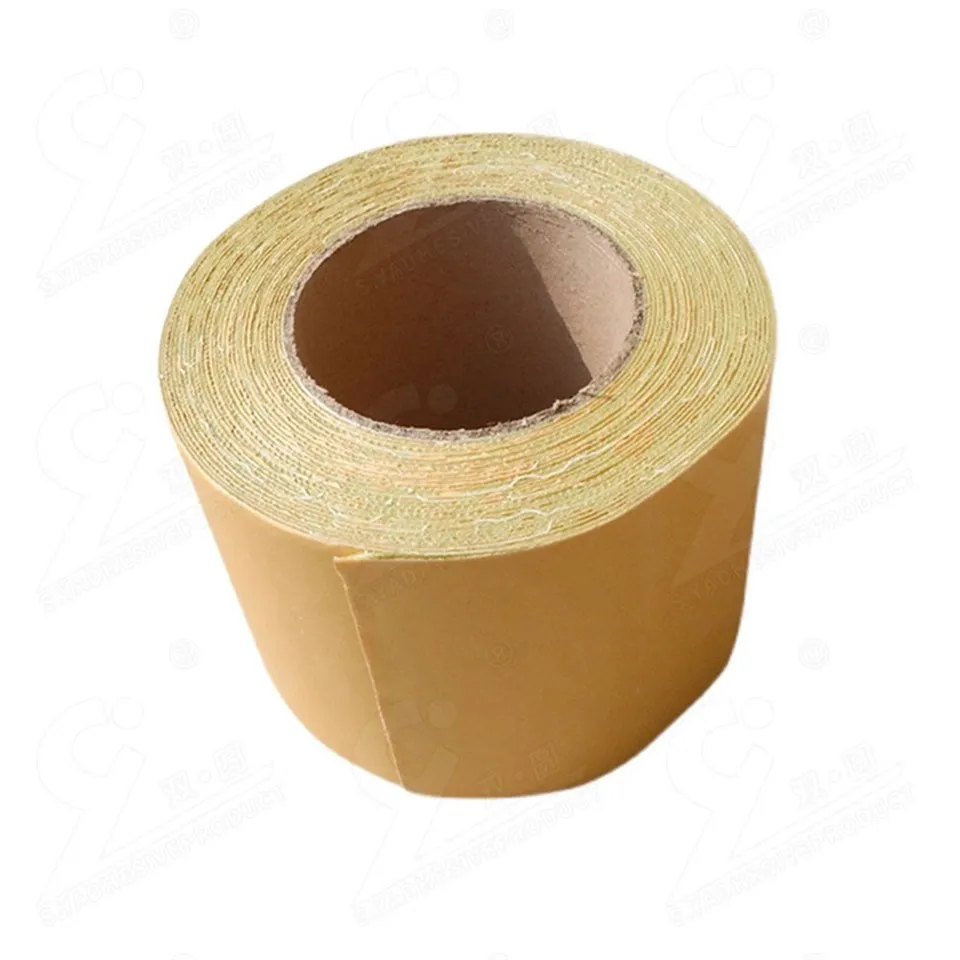
Butyl rubber is a synthetic rubber that has excellent air and water vapor barrier properties. It also has good resistance to ozone, sunlight, and chemicals. Butyl rubber sealing strips are commonly used in the construction industry for waterproofing applications, such as in roofing and window seals. Our company offers Yellow Adhesive Double Sided Overlap Tape and Grey Adhesive Double Sided Overlap Tape, which are made of high - quality butyl rubber and are ideal for sealing joints and seams in various construction projects.
Composite Materials
Composite materials are made by combining two or more different materials to achieve a combination of properties. For example, a rubber - plastic composite material may offer the flexibility of rubber and the chemical resistance of plastic. Composite sealing strips are often used in applications where a specific combination of properties is required.
Foam Materials
Foam materials, such as polyurethane foam and polyethylene foam, are also used in the production of sandwich cover sealing strips. Foam sealing strips offer good cushioning, insulation, and sealing properties. They are commonly used in applications where vibration damping and noise reduction are important, such as in automotive and electronic devices.
Applications of Different Materials
The choice of material for a sandwich cover sealing strip depends on the specific application requirements. Here are some examples of how different materials are used in various industries:
- Construction Industry: In the construction industry, EPDM and butyl rubber sealing strips are commonly used for window and door seals, roofing membranes, and expansion joints. PVC sealing strips are also used for window profiles. Our Construction Sealant Strip is a popular choice for construction projects due to its excellent waterproofing and sealing properties.
- Automotive Industry: Nitrile rubber and EPDM sealing strips are commonly used in automotive applications, such as in door seals, window seals, and engine gaskets. Silicone rubber sealing strips are used in high - temperature areas, such as around the engine and exhaust system.
- Electronics Industry: Silicone rubber and foam sealing strips are commonly used in electronics applications to provide dust and moisture protection, as well as vibration damping.
Conclusion
In conclusion, sandwich cover sealing strips can be made from a variety of materials, each with its own unique properties and applications. As a supplier of these sealing strips, we understand the importance of choosing the right material for the specific application. Whether you need a sealing strip with high - temperature resistance, excellent waterproofing properties, or good chemical resistance, we have the expertise and products to meet your needs.
If you are interested in purchasing sandwich cover sealing strips or have any questions about our products, please feel free to contact us for further information and to start a procurement negotiation. We are committed to providing high - quality products and excellent customer service.
References
- "Handbook of Elastomers" by B. D. Croll and M. E. Hess
- "Plastics Materials" by J. A. Brydson
- "Rubber Technology" by Maurice Morton